
What happens to our frozen embryos if we separate?
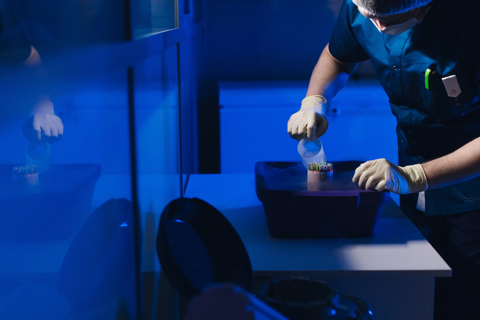
When a relationship breaks down, frozen embryos raise legal questions that a standard property settlement doesn't answer. Undergoing In Vitro Fertilisation (IVF) is one of the most physically demanding and emotionally exhausting journeys a couple can undertake, and separation compounds that grief with real uncertainty over what happens next.
This is a profoundly difficult space to navigate, often fraught with exhaustion and competing desires. However, understanding the strict legal frameworks that govern artificial reproduction can help you regain a sense of control and clarity.
Family lawyers play a crucial role in bridging the gap between the emotional reality of your situation and the hard-nosed statutory guidelines that dictate what happens next. By approaching this issue with clear, objective strategies, you can protect your rights and minimise unnecessary conflict.
Are frozen embryos considered property in Australia?
In Australian family law, frozen embryos sit in a highly complex and unique legal category. They are not considered "property" in the traditional sense under the family law.
Unlike a family home, a joint bank account, or superannuation, a court will not simply divide embryos as part of your standard property settlement. You cannot trade them for a larger share of the asset pool.
Instead, the storage, use, and disposal of embryos are governed primarily by State and Territory Assisted Reproductive Treatment (ART) legislation, alongside the strict ethical guidelines set by the National Health and Medical Research Council (NHMRC).
The family court deals with existing children and property, however embryos fall outside its standard jurisdiction.
Why mutual consent decides what happens to your embryos
The bedrock of all Australian ART legislation is the requirement for mutual, ongoing consent. For an embryo to be used, stored, donated, or destroyed, both parties who provided the genetic material must provide explicit, current consent.
When a couple separates, the legal landscape shifts immediately. If one person formally withdraws their consent for the embryos to be used, the IVF clinic is legally and ethically prohibited from allowing the other person to proceed with a transfer.
Australian courts and legislative bodies operate under the public policy stance that individuals should not be forced into legal and biological parenthood against their will. Therefore, if your former partner withdraws consent, you cannot use the embryos to achieve a pregnancy, regardless of the emotional or financial investment you have made.
Who pays for embryo storage during separation?
While embryos are not property, the financial obligations attached to them remain a critical part of your separation. Couples must adhere to the principle of "full and frank disclosure" regarding all financial liabilities.
Ongoing clinic storage fees are a joint liability that must be addressed. Unpaid fees can lead to the clinic lawfully destroying the embryos after a specified period of non-payment.
If you wish to preserve the embryos while negotiating your broader family law settlement, you must establish a clear agreement on who will maintain the storage invoices in the interim.
What does your IVF clinic contract say about separation?
Before initiating IVF, you and your former partner signed extensive documentation with your clinic. This contract is the foundational document that dictates the default administrative processes.
-
Request the original paperwork: The clinic agreement is the first document your legal practitioner will ask to examine to understand your baseline rights.
-
Check the storage limits: State laws dictate maximum storage periods (often 5 to 10 years, depending on your jurisdiction). Embryos must generally be allowed to succumb after this period unless a formal extension is granted.
-
Review default separation clauses: Many clinic consent forms include a specific clause outlining what happens to the embryos in the event of relationship breakdown or death.
How to communicate about embryos during separation
Discussions about genetic material can rapidly become emotionally volatile. When communicating with a former partner about embryos, it is critical to de-escalate the situation by removing emotional accusations and sticking strictly to administrative realities.
Relying on broad labels or focusing on past grievances will only stall negotiations. Instead, instruct yourself to communicate using concrete, objective, and measurable terms.
Phrases to Avoid:
“You know how much I sacrificed to get these embryos. You are just trying to punish me and destroy my chances of having a child. You are completely toxic and selfish.”
Consider saying:
“The clinic has emailed the $450 annual storage invoice, due on the 15th. I would like to maintain storage for another 12 months while we finalise our settlement. Let me know by Friday if you are agreeable to splitting this, or if I should pay it in full for now.”
Dispute resolution: out-of-court agreements vs. court intervention
Our primary goal is always to prioritise out-of-court settlement safely. Structured negotiation and mediation are the most cost-effective and emotionally protective paths forward.
Through mediation, separating couples can often reach a mutual agreement to either continue paying for storage, donate the embryos to scientific research, or allow them to succumb respectfully.
However, there are specific triggers for formal court intervention. When informal or structured negotiation completely fails, usually when the parties can’t agree on the embryos’ future, litigation becomes a consideration.
-
The Family Court limits: The Family Court will rarely intervene, as embryos do not fit the criteria of property, nor do they fall under parenting orders guided by the "best interests of the child" (as the child does not yet exist).
-
Supreme Court injunctions: In highly specific and rare circumstances, parties have applied to State Supreme Courts for injunctions to prevent the destruction of embryos.
-
The reality of litigation: These Supreme Court cases rely heavily on complex contract law. They are financially draining, publicly exposed, and very rarely result in a court forcing a party to become a parent against their will.
What to do now: your frozen embryo checklist
If you have recently separated and have frozen embryos in storage, you must take immediate, practical steps to protect your position.
-
Notify the clinic in writing: Immediately inform your IVF clinic of your separation. This formalises the change in circumstances and places an administrative freeze on the embryos, preventing unilateral use.
-
Secure your consent forms: Request a complete copy of all agreements and consent forms you signed at the commencement of your treatment.
-
Address the next invoice: Do not let the embryos be destroyed accidentally due to unpaid fees. Pay the storage fees to buy yourself time while you seek legal advice.
-
Seek jurisdiction-specific advice: Because ART laws vary significantly between states (for example, Western Australia’s legislative framework differs from New South Wales), you require legal advice tailored specifically to the state where the clinic operates.
-
Draft a binding agreement: If you and your ex-partner reach an agreement on the fate of the embryos, have your family lawyer document this formally alongside your broader property or parenting agreements.
Protecting your wellbeing
We recognise that navigating the fate of frozen embryos is not merely a legal or transactional hurdle. It involves deep, disenfranchised grief and touches on the very core of your hopes for the future. We strongly advise engaging a GP or a psychologist who specialises in fertility counselling and grief.
Never treat a legal dispute of this nature as purely administrative. Protecting your mental health and maintaining strong personal boundaries are absolute prerequisites for maintaining a strong, strategic legal position.
How Meillon & Bright can support you
At Meillon & Bright, we are specialist family lawyers dedicated to supporting you through every phase of your separation. We provide the strategic framework needed to negotiate complex, emotionally charged property and parenting settlements safely and pragmatically.
In the rare instances where out-of-court agreements over the use of embryos completely fail, formal legal action regarding embryos falls outside the standard Family Court jurisdiction. Should your matter require an injunction or complex contract application in a State jurisdiction, such as the NSW Supreme Court, we will refer your matter to trusted civil law experts for specialised advice.
You will not have to navigate this transition alone. We will ensure you are in the right hands, working collaboratively with these civil litigators so that your broader family law settlement remains seamless and entirely protected.
If you're separating and have frozen embryos in storage, contact our Perth or Sydney family law team today to understand your options and protect your position.
Contacting Meillon & Bright
Family Lawyers Perth & Sydney
The information contained in this article is of general nature and should not be construed as legal advice. If you require further information, advice or assistance for your specific circumstances, please contact Meillon & Bright Family Lawyers.